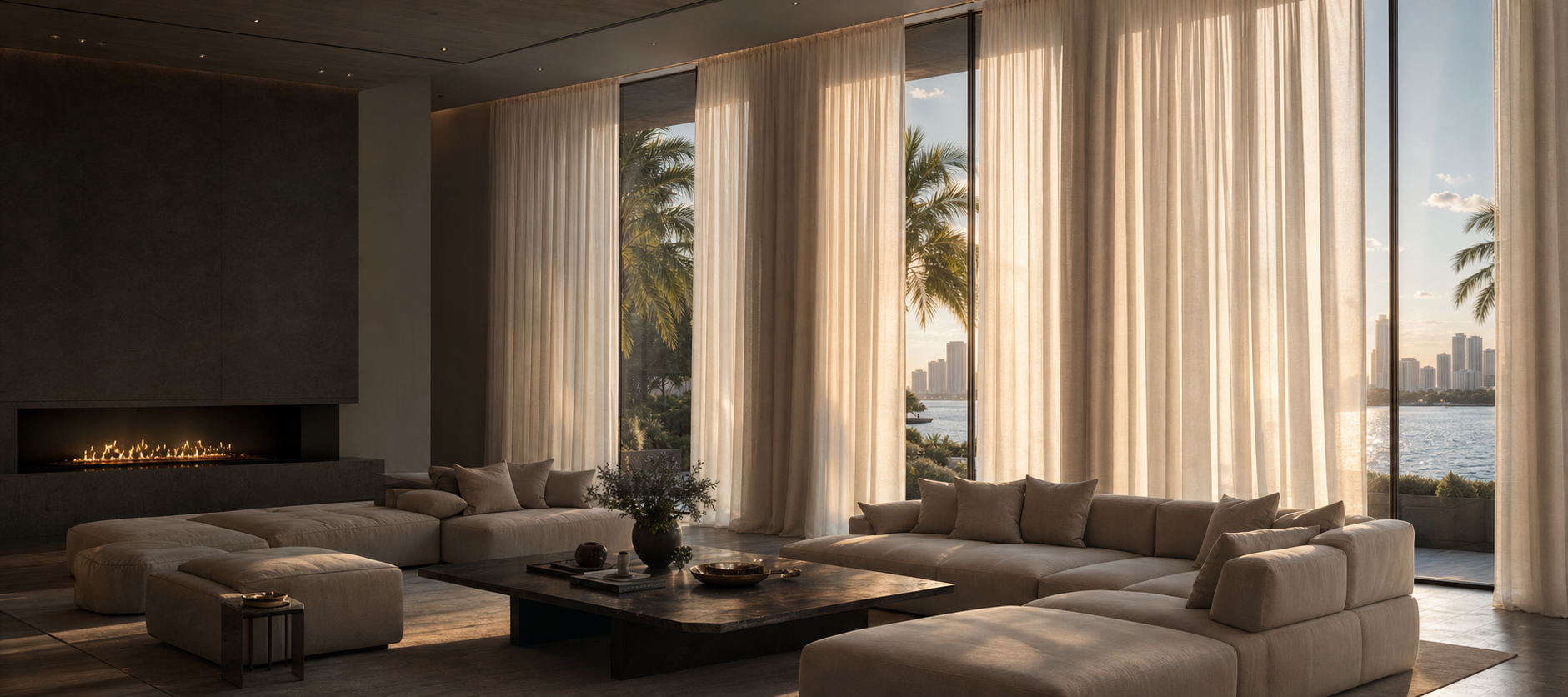
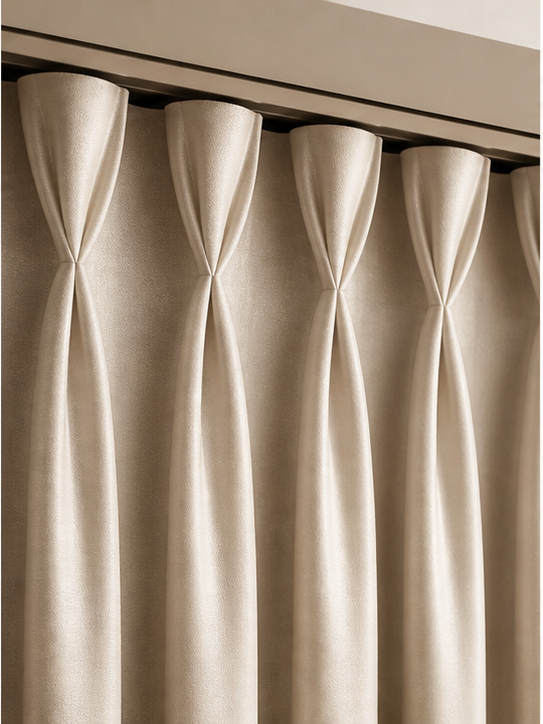
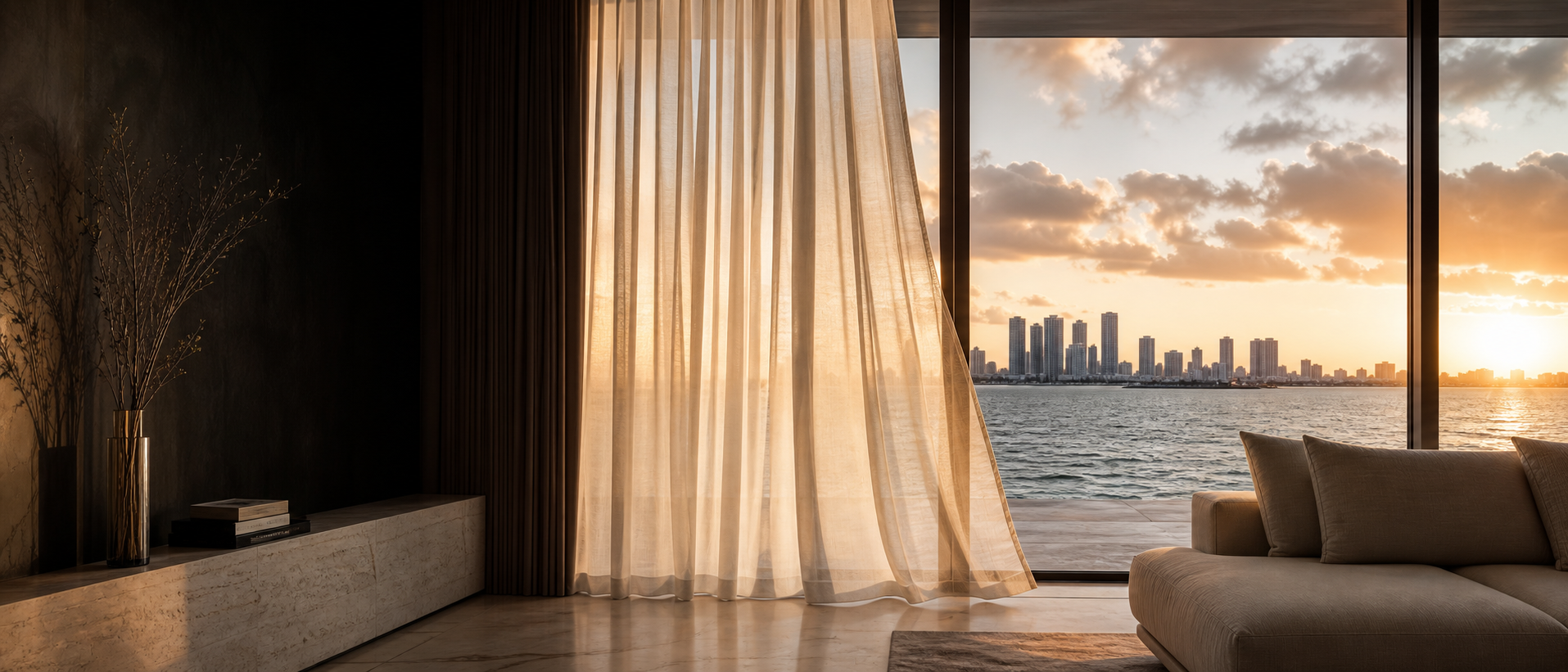
Sheer drapery across a double-height glazed opening
ARCHITECTURAL TEXTILES

Custom drapery,
composed around material and movement.

Fabric, texture, pleats, fullness, and draping shaped by light, scale, surrounding materials, and the way each space is experienced.

ARCHITECTURAL TEXTILE ROLE

Where architecture finds its softness.

Custom drapery introduces material, movement, and visual rhythm as part of the architectural composition. Its scale, texture, and draping are shaped by the windows, ceiling height, daylight, surrounding finishes, and the atmosphere the space is intended to create.

FABRIC DIRECTIONS

Every fabric changes how the space is felt.

Each fabric creates a different balance of light, texture, movement, and visual weight. The appropriate direction depends on the architecture, surrounding materials, privacy needs, and atmosphere of the space.

Sheer drapery design direction in an architectural interior

Sheer

A light, fluid direction that may soften daylight while maintaining a visual connection beyond the window. Privacy and visible silhouettes vary with the fabric and lighting conditions.

Light characterSoft / diffusedPrivacy directionCondition-dependentMovementFluidVisual weightLight
EXPLORE DIRECTION
Textured drapery design direction beside a dining space

Textured

A more tactile expression shaped by weave, surface, and shadow. Its character changes with viewing distance, natural light, and the materials surrounding it.

Light characterSurface-definedPrivacy directionMaterial-dependentMovementMaterial-dependentVisual weightModerate
EXPLORE DIRECTION
Lined drapery design direction in a bedroom environment

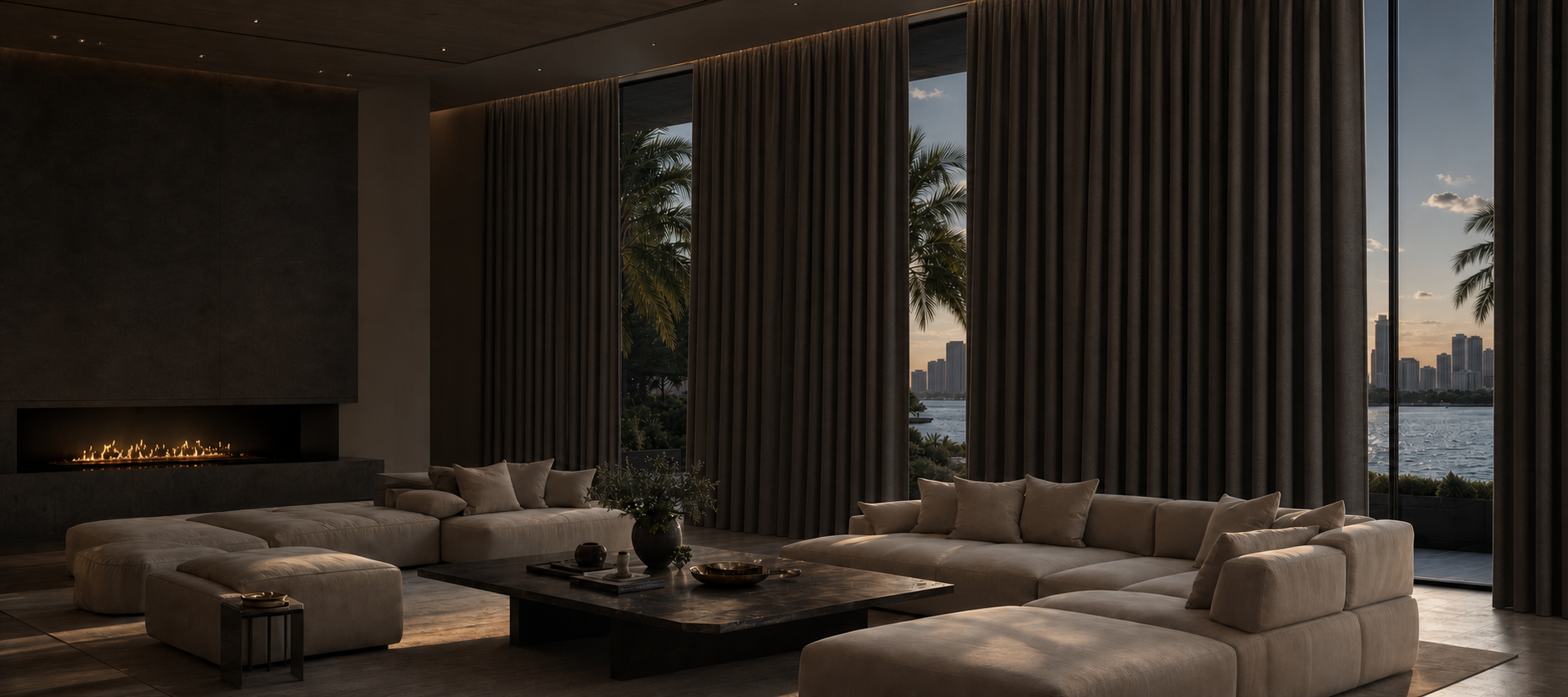
Lined / More Opaque

A fuller textile direction that may support greater privacy and light management. Final appearance and behavior depend on the face fabric, lining, construction, mounting, and project conditions.

Light characterMore controlledPrivacy directionGreater coverageMovementFullerVisual weightGreater
EXPLORE DIRECTION

Explore how fabric, pleat, and draping directions transform the same architectural space.

TEXTURE & MATERIAL CHARACTER

Texture gives material a presence of its own.

Texture shapes how fabric interacts with light, creates shadow, and relates to the finishes around it. Its character should be considered within the complete material palette rather than through an isolated digital swatch.

01

Refined & Quiet

A restrained surface with subtle variation, suited to interiors where the textile should support the architecture without becoming visually dominant.

02

Organic & Woven

A visibly woven direction that may introduce natural variation, depth, and a more tactile relationship with wood, stone, and other expressive materials.

03

Structured

A more defined material presence that may create clearer folds, more defined rhythm, and a composed relationship with formal architectural lines.

04

Soft & Flowing

A fluid direction shaped by gentle folds and movement, bringing softness to spaces with harder surfaces or visually precise geometry.

Material character becomes fully expressed through the way the fabric is pleated, gathered, and allowed to drape.

PLEATS, FULLNESS & DRAPING

Pleats establish the rhythm. Draping completes the form.

Each element is composed in relation to the material, window scale, mounting conditions, and surrounding architecture.

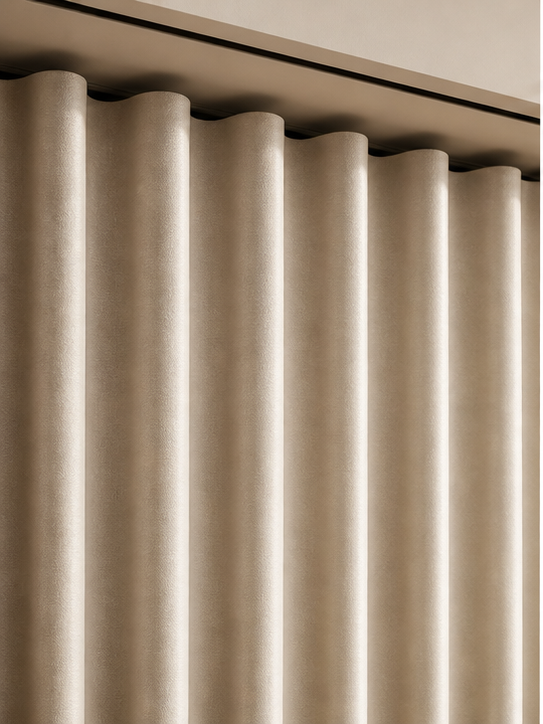
Ripple Fold

A continuous wave-like direction that may create an even rhythm across the fabric and a fluid relationship between the textile and the opening.

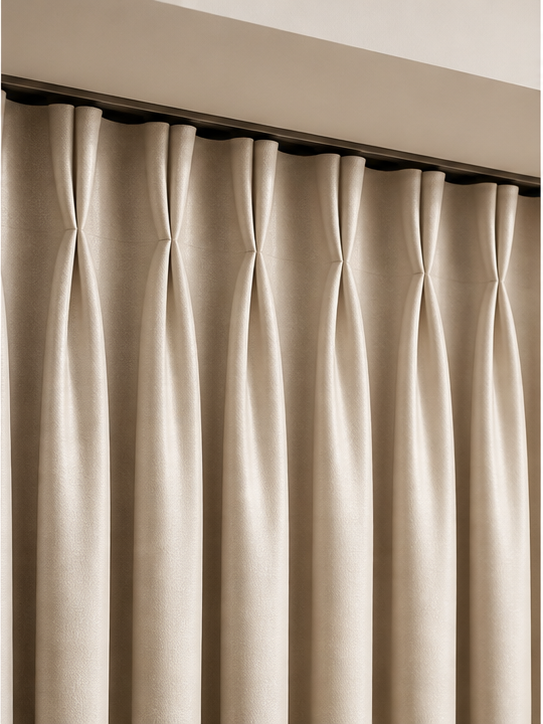
Pinch Pleat

A gathered top construction that releases into fuller folds below, creating a more tailored expression with visible structure and depth.

Tailored Pleat

A tailored construction that may bring measured rhythm and a more composed relationship to formal architectural lines.

Pleat direction, fullness, hardware, stack, and draping depend on the selected fabric, dimensions, mounting system, and project conditions. Availability and suitability must be confirmed before final selection.

Compare how fabric, pleat, fullness, and draping reshape the same architectural space.

DIGITAL SHOWROOM

See material and movement reshape the same space.

Explore how fabric direction, texture, pleat style, fullness, movement, and draping may change the atmosphere and composition of the same architectural environment.

Fabric direction
Pleat direction
Curtain position
Illustrative sheer drapery with ripple pleats, shown with the curtain closed

Sheer · Ripple Pleat · Curtain closed

A lighter visual layer with fluid movement and a softer interaction with daylight. Privacy and visible silhouettes vary with the material and lighting conditions. A continuous sequence of waves that may create an even rhythm and fluid movement across the opening. Shows how the selected fabric and pleat direction repeat, fall, and occupy the window when drawn across the opening.

This visualization is illustrative and not color-, texture-, scale-, or movement-accurate. Screens cannot reproduce the exact color, opacity, weave, texture, fullness, fall, gathering, or draping of a physical textile. Actual appearance and behavior depend on the selected fabric, pleat construction, dimensions, hardware, mounting, lighting, and project conditions. Physical samples and a review of the actual space are required before final selection.
LAYERING STRATEGY

Layers should work together, never compete.

Layering may be considered when a space calls for more than one response to material, light, privacy, or daily use. Each element should serve a distinct purpose while remaining part of one architectural composition.

01

Distinct Roles

Drapery may contribute softness, texture, and movement while a secondary treatment addresses another project priority. The purpose of each layer should be defined before the composition is developed.

02

Material Balance

Contrasting opacity, texture, scale, and visual weight can create depth, provided the layers remain connected to the surrounding architecture and interior materials.

03

Hardware & Spatial Coordination

Tracks, rods, mounting systems, stack, projection, and clearance must be coordinated as parts of the complete composition rather than treated as independent product decisions.

04

Daily Use

The way each layer opens, gathers, overlaps, and is used throughout the day should inform the overall composition.

Layering is not necessary for every space and does not guarantee specific light, privacy, acoustic, or thermal outcomes. Final suitability depends on the selected materials, hardware, dimensions, mounting, controls, and project conditions.

The appropriate composition changes with the way each residential or commercial environment is used.

RESIDENTIAL & COMMERCIAL

Material expression begins with how the space is used.

The appropriate drapery direction changes with the scale, routines, atmosphere, and architectural priorities of each environment.

Residential interior concept with full-height glazing

Residential

In homes and condominiums, fabric, pleats, fullness, and layering are considered around personal routines, room-specific privacy, daylight, views, surrounding finishes, and the way each interior is experienced throughout the day.

EXPLORE RESIDENTIAL
Hospitality interior design scenario with drapery

Commercial

In commercial and hospitality environments, the composition is shaped by scale, repeated openings, daily use, material consistency, access, and the architectural character of the setting.

EXPLORE COMMERCIAL
PROJECT DECISION CRITERIA

The complete composition begins with the details of the space.

Every custom drapery project is shaped by a combination of architectural, material, visual, and installation conditions that must be considered together.

DISCUSS YOUR PROJECT
01

Architecture & Window Scale

Review the dimensions, ceiling height, surrounding walls, and relationship between the opening and the wider architectural composition.

02

Fabric & Texture

Consider material character, visual weight, opacity, movement, and how the fabric relates to daylight and surrounding finishes.

03

Pleats, Fullness & Draping

Coordinate the construction direction with the way the selected fabric repeats, falls, gathers, and occupies the space.

04

Light, Privacy & Views

Define how daylight, visible silhouettes, privacy needs, and the desired connection beyond the window change throughout the day.

05

Hardware, Mounting & Stack

Evaluate tracks, rods, mounting conditions, projection, clearance, and the space required for the fabric when gathered.

06

Layering & Daily Use

Determine whether multiple treatments serve distinct purposes and how each layer functions within the environment.

07

Installation Conditions

Confirm access, surfaces, clearances, dimensions, and other site-specific requirements before finalizing the direction.

LUMINIX CUSTOM DRAPERY PROCESS

A considered process, from architecture to installation.

Each project moves through a clear sequence of evaluation, material direction, coordination, and installation shaped by the actual windows and environment.

BEGIN YOUR CONSULTATION
01

Consultation

We begin by understanding the architecture, daily use, material direction, privacy needs, and atmosphere envisioned for the space.

02

Site & Window Review

Window dimensions, ceiling conditions, mounting surfaces, clearances, access, and surrounding architectural details are reviewed.

03

Material & Pleat Direction

Fabric, texture, opacity, pleat style, fullness, draping, and hardware are coordinated as one architectural composition.

04

Physical Sample Review

Physical samples are reviewed within the project context to better understand color, texture, weave, opacity, and their relationship with the surrounding materials and light.

05

Measurement & Project Coordination

Dimensions, mounting direction, hardware, stack, layering, and applicable project requirements are coordinated before the approved direction moves forward.

06

Installation & Handoff

The approved drapery system is installed, reviewed, and presented within the completed space.

DESIGN SCENARIOS

Different spaces shape different textile compositions.

These design scenarios illustrate how architecture, daylight, privacy, scale, material character, and daily use may guide different custom drapery directions.

These images and recommendations represent design scenarios, not completed Luminix projects or final specifications. Product suitability, fabric availability, appearance, behavior, hardware, construction, and installation requirements must be confirmed for the actual space and selected materials.EXPLORE THE GALLERY
Sheer drapery design scenario in waterfront living

Waterfront Living

Sheer fabric with a fluid pleat direction may introduce softness while maintaining a visual relationship with outward views. Final material and construction depend on exposure, privacy needs, window scale, and project conditions.

Lined drapery design scenario in a primary suite

Primary Suite

Lined or more opaque fabric with fuller draping may be considered where privacy, atmosphere, and greater light management are priorities. Final behavior depends on the material, lining, construction, mounting, and light gaps.

Textured drapery design scenario in a dining environment

Dining & Entertaining

Textured or sheer fabric may bring material depth and movement to the space while maintaining a lighter relationship with daylight and surrounding finishes.

Full-height drapery shown across a double-height opening

Double-Height Interior

Large-scale openings require careful coordination of fabric weight, pleat direction, fullness, hardware, stack, access, and mounting conditions before a final composition is established.

Drapery design scenario in a hospitality environment

Hospitality Environment

A coordinated textile direction may help create material consistency across an environment while responding to the scale, use, access, and architectural character of each opening.

Drapery design concept within a warm architectural interior
DESIGN CONSULTATION

Let the space define the textile composition.

A design consultation brings together the architecture, windows, light, privacy, materials, draping, and daily use into one considered custom drapery direction.